
Reads four signals at once
Expert work is recorded not as a single photo but as four signals over time.
A wrist camera sees the fabric and needle area together with depth information.
Our own data glove records finger flexion and hand posture.
Force is read indirectly from workstation signals such as servo current and load cells.
Markers track wrist position and orientation to align the timing of motion.
Predicts motion in chunks
Imitation learning
The model learns to copy the same judgments and motions from expert demonstrations. People do not hand-write rules one by one.
Action chunking
Instead of one step at a time, it predicts several steps ahead at once, so motion stays smooth and unbroken over fabric.
Material generalization
The goal is a general model that works across many materials, not values tuned to a single fabric.
Grown by validating in the field
Validate first in simulation, then on the real line compare the model's judgments beside human workers before deployment.
Development targets set in numbers
These figures are development targets, not achieved results.
Right on top of the existing sewing machine
Fixed cell
A fixed, non-moving cell needs no legs or battery. It mounts beside the existing sewing machine.
Actuator sourcing
Actuators are bought in volume to cut cost, and differentiation lives in software.
Vendor independence
The whole stack is ROS-based, so robot arm and hand vendors can be swapped.
From pilot to field deployment
The goal is for the robot to perform straight-seam motions in a real factory.
Measure success rate, cycle time and defect rate.
The goal is a successful curved-sewing demonstration.
Expand to other factories making the same products.
A data-collection glove built for sewing
Instead of a general-purpose glove, MOTUS's own collection glove is designed around sewing motions and fabric tension.
First build complete Oct 2026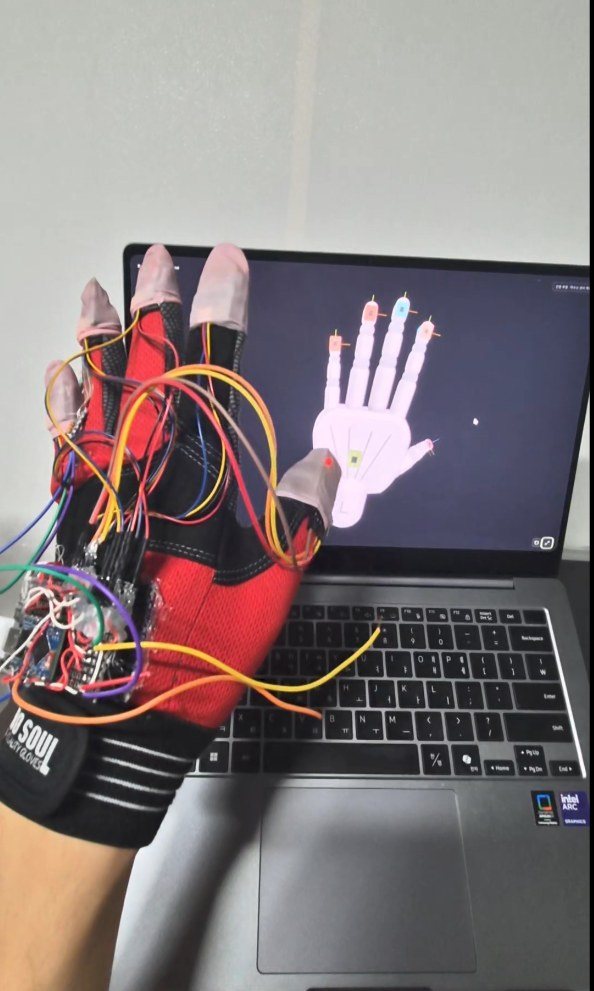
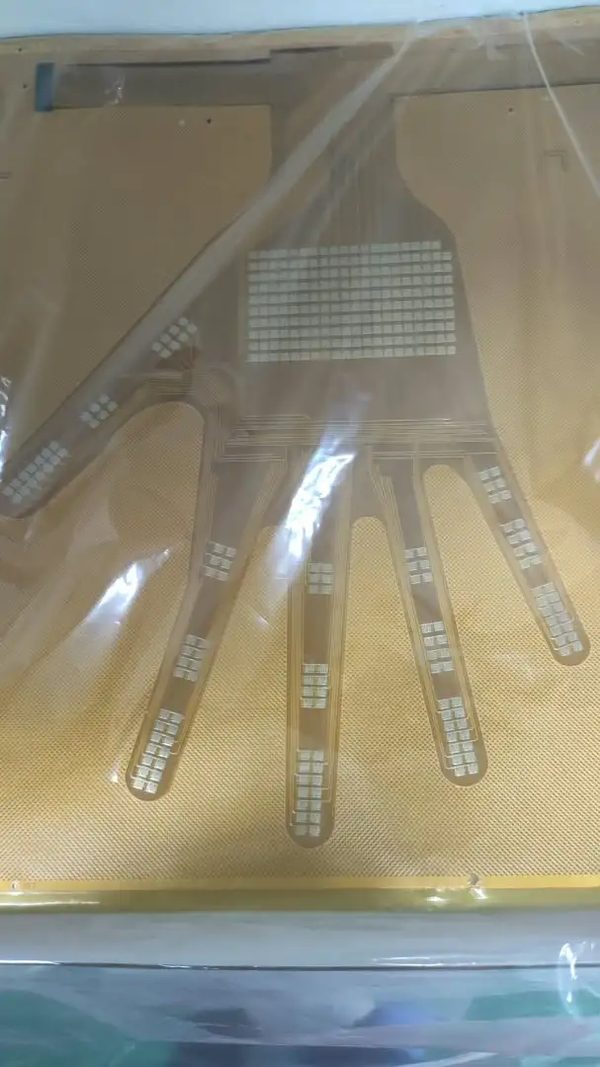
Designed around sewing motions
Training a robot requires collecting many experts' hand skills over a long time. A glove that does not suit sewing misses the information we need.
Designed for sewing motions
Focused on reading the fine hand motions of gripping, pushing and pulling fabric, and its tension.
Open, ROS-based structure
Collected hand poses go straight out via ROS into MOTUS's training pipeline, and parts and vendors can be swapped.
Many sensors read hand movement precisely
Each finger has a flex sensor measuring flexion, and an IMU on the back of the hand measures hand posture and movement. EMF (electromagnetic field) sensing to improve precision and a pressure sensor for tension are under review.
Different sensors cover finger flexion, hand posture and tension.
Flex sensors + IMU
The first build collecting finger flexion and hand posture was completed in October 2026.
IMU drift-correction software
Software corrects the posture error that builds up over time.
EMF (electromagnetic field) sensing
We are reviewing using magnetic fields to read absolute hand position and posture, correcting IMU error and raising precision. Interference from sewing machine motors and metal needs on-site validation.
Pressure sensor for tension
We are also reviewing pressure sensors to read how hard the fabric is pulled.
From raw signal to training data
Glove signals pass through calibration to become a hand-pose stream, which feeds MOTUS RFM training directly.
So error does not build up over time
An IMU accumulates angle error over time. To collect reliably through long work hours, that error must be corrected; MOTUS is developing its own correction software and also reviewing EMF sensing to secure a reference point.
The goal is that error builds up before correction and stays constant after.
Record even the force of pulling the fabric
Expert workers sew feeling the fabric's tension in their fingertips. To capture that as data, we are reviewing pressure sensor arrays. These are samples of candidate sensors for the glove.
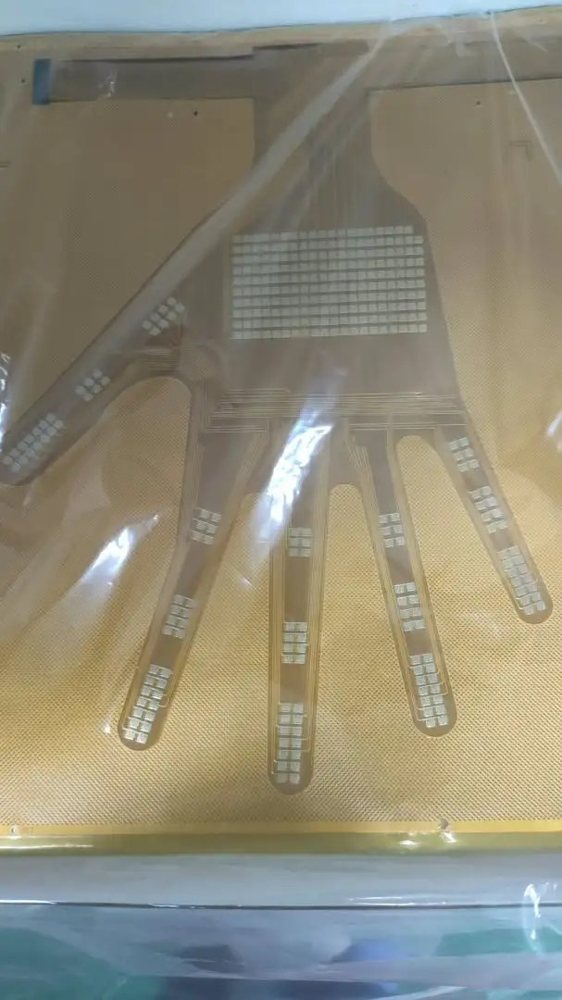 Candidate pressure sensor array (under review)
How is it different from general gloves?
| General-purpose motion-capture glove | MOTUS own glove | |
|---|---|---|
| Design purpose | General hand tracking | Sewing motions and fabric tension |
| Tension sensing | Not applicable | Pressure sensor under review |
| Software | Separate integration needed | ROS-based, direct to training pipeline |
| Status | Commercial product | First build complete (Oct 2026) |
From the field to robot data
Implemented hand-pose collection with flex sensors and an IMU.
Corrects drift so collection stays stable over long work.
Review EMF and pressure sensors and integrate them into the glove.
Deploy to the factory, and once robots are deployed, switch the collector from people to robots.
One factory's success calls the next factory
We welcome inquiries about sewing automation, data collaboration and investment.